



Building Compliance When Buying in Liguria, Italy
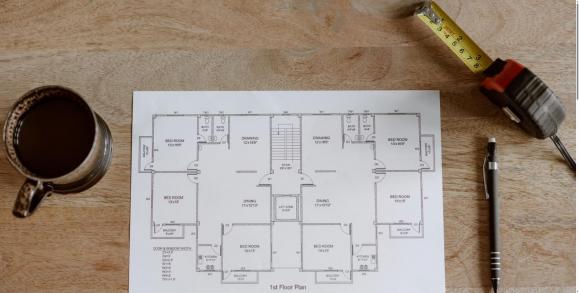
Before buying a home in Italy you need to know one thing: is it legally compliant? In other words, does the property match what the town hall authorised and what is recorded at the land registry? In Italy this is a specific check, and it is not done automatically for the buyer. The RRE (Relazione di regolarità edilizia, building compliance report) is the document in which a surveyor puts the answer in writing.
Keep in mind that a property in Italy is governed by Italian law, whatever your nationality. Do not assume that the checks you know from home have been done. In particular, the Italian notary (notaio) is a neutral public official, not a solicitor or lawyer acting for you, and does not carry out a full building survey.
What the RRE is
It is a report signed by a qualified technician: a geometra (surveyor), architect or engineer. The technician compares three things: the actual property, the building permits filed at the Comune (town hall) and the data and floor plan held by the catasto (land registry). The report usually lists:
- the description of the property and its cadastral data;
- all building permits, including any amnesty (condono);
- the result of the check, with any discrepancies and how they can be fixed.
The RRE is not required by law. It began as good practice agreed between notaries, professional bodies and estate agents' associations, for example in Turin in 2023. Similar reports exist elsewhere in Italy under other names. What the law does require are certain statements in the deed of sale, explained below.
Two different checks: land registry and town hall
Cadastral compliance. Since 1 July 2010 the deed must identify the property in the land registry, refer to the filed floor plan and include the owners' statement that data and plan match the actual property. A qualified technician can certify this instead. Without it, the deed is void (art. 29(1-bis), Law 52/1985, added by Decree-Law 78/2010).
Planning compliance. The deed must state the building permits for the property, or it is void. The rule is in art. 46 of Presidential Decree 380/2001 for buildings started after 17 March 1985, and in art. 40 of Law 47/1985 for older ones. For buildings started before 1 September 1967, a sworn statement by the seller is enough.
Note: an up-to-date cadastral plan does not prove that the town hall considers the property lawful. The land registry is a tax register. Planning compliance is checked against the permits at the Comune.
A valid deed does not mean a compliant home
In 2019 Italy's Supreme Court, sitting in joint session (Cassazione, Sezioni Unite, judgment 8230/2019), ruled that the deed is valid if it states a building permit that really exists and refers to that property, even if the property does not fully match it.
So the notary can complete the sale even when there are discrepancies. But the discrepancies stay with the property, and pass to the buyer. They can cause problems when you renovate, claim a building tax credit, apply for a mortgage or sell. That is why it pays to know in advance.
What changed in 2024 ("Salva Casa")
Decree-Law 69/2024, converted by Law 105/2024, amended Italy's building code (Presidential Decree 380/2001). In short:
- Lawful status (art. 9-bis(1-bis)): proven by the original permit, or by the permit for the last works on the whole property, plus any later permits. For buildings from a time when no permit was required, the first cadastral records and other evidence, such as photos, maps and deeds, can be used.
- Tolerances (art. 34-bis): a deviation of up to 2% from the approved measurements is not a violation. For works carried out up to 24 May 2024, the tolerance ranges from 2% to 6% depending on floor area; the smaller the home, the wider the margin (6% under 60 m²).
- Simpler regularisation for partial discrepancies (art. 36-bis).
Liguria also has its own regional building law (Regional Law 16/2008), and in 2025 the Region approved guidelines for applying Salva Casa.
When to get one
- Before signing the compromesso (the binding preliminary contract). Italian law gives no cooling-off period after signing it. If the check is not done yet, the compromesso can make the purchase conditional on its outcome.
- Especially for older homes, homes renovated several times, or with enclosed verandas, attic conversions, changes of use or splits into separate flats.
The technician will need the seller's title deed, the building permits, the cadastral records (visura) and floor plan, any certificate of habitability (agibilità) and the energy performance certificate (APE).
How we help
Aquamarina Real Estate assists international buyers in Sanremo, Bordighera and across the Riviera di Ponente, and stays with you through the checks until completion (rogito, the final deed signed before the notary).
Email info@aquamarina.email or call +39 0184 26.16.87. Offices in Sanremo, Via Roma 32, and Bordighera, Via Vittorio Emanuele 302.
Read also: Buying a Home in Liguria from Abroad: A Guide · See our properties for sale
Want the full guide?
Our free buyer's guide covers every step, cost and tax, from the preliminary contract to completion. Request it here.
Plus, if you wish, a free 15-minute phone or video call with one of our experts.
This guide is for information only and does not replace advice from a notary or a qualified technician.