



Buying an Apartment in Italy: What to Ask First
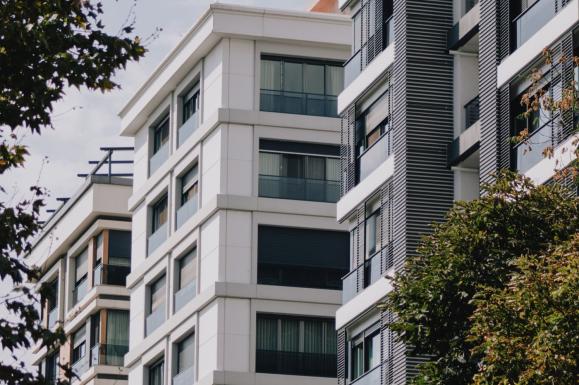
Most apartments on the Italian Riviera are in a condominio, a building with shared parts run by an administrator (amministratore) and an owners’ meeting (assemblea). Checking that the seller’s fees are paid is only the first step: see our guide on condominium fees. Here is the rest: old damage, approved works, lawsuits, drains and courtyards, including recent court decisions. Italian law applies, whatever the rules in your own country. There is no equivalent of the English leasehold management pack: you have to ask for the documents.
1. Damage caused by shared parts before you bought
In order no. 26902 of 15 October 2026 the Italian Supreme Court (Corte di Cassazione) looked at water damage from shared parts. The condominium had been ordered to pay compensation to one owner and split the sum among the current owners, including buyers who arrived after the damage. The principle: the duty to pay compensation does not pass to the buyer. Those who owned the flat when the damage occurred are liable. Art. 63(4) of the implementing provisions of the Italian Civil Code covers condominium contributions, not compensation.
Two cautions. The case was sent back to the lower court, which may also examine the clauses of the deed, so what you sign matters. And if you are charged for old damage, check the dates with a lawyer at once: a resolution must be challenged within 30 days (art. 1137 Italian Civil Code).
2. Major works already decided
According to the Supreme Court, the duty to pay for major works arises with the resolution ordering them, not with the later cost allocation (nos. 15547/2017 and 24654/2010). So they fall on whoever owned the flat at that moment, even if work starts after completion. A merely preparatory resolution, assessing the works or requesting quotes, is not enough: what counts is the one approving works and price (no. 18793/2020). If that comes after the deed, the buyer pays. Buyer and seller can agree otherwise, but that agreement does not bind the condominium (no. 14531/2022). The buyer is also jointly liable with the seller for contributions of the current and previous year (art. 63(4)). In practice, state in the preliminary contract (compromesso) who pays and how, for example by settling instalments at the deed (rogito).
3. Pending lawsuits
If you buy a home already involved in a lawsuit, for example an owner claiming a shared part, the judgment also binds you (art. 111 Italian Code of Civil Procedure; Supreme Court no. 11593 of 28 April 2026). To claim damages from the seller you need a separate action. Before the compromesso, ask about lawsuits and have the property registers checked.
4. What to get, and from whom
The administrator must give any owner who asks a statement of payments and pending lawsuits (art. 1130 no. 9 Italian Civil Code). The law refers to the owner, so the seller makes the request, not you. It is not a full release: adjustments can still appear later. Get these before your offer, updated before the deed:
- statement of payments and lawsuits;
- minutes of the latest meetings;
- latest accounts, budget and cost allocation;
- building rules (regolamento) and ownership shares (tabelle millesimali).
5. Drains and pipes
Water and sewage systems are shared up to the point where they branch off to individual units, unless the title says otherwise (art. 1117 no. 3 Italian Civil Code). The joint linking your drain to the main stack (braga) has been held to be private (Supreme Court no. 1027/2018): if it leaks, the problem may be yours. A pipe running through a flat but serving several units remains shared, as the Court of Castrovillari decided (no. 1055/2026). In older buildings, ask about past leaks and any drain repairs.
6. Courtyards, parking and “exclusive use” gardens
The courtyard is shared unless the title says otherwise (art. 1117 no. 1). Each owner may use it without changing its purpose or preventing others from doing the same (art. 1102). So the Supreme Court accepted bicycles neatly placed without blocking the way or the garage (no. 26539 of 9 October 2026), while the Court of Lodi banned a car permanently parked without title (no. 106/2026).
Be careful with listings offering “exclusive use” of a parking space or garden. The Supreme Court in joint session (no. 28972 of 17 December 2020) ruled out creating a property right of exclusive use over a shared part. According to commentators, you then need to establish what the parties really intended: ownership, a right of use or just a contractual agreement. Before paying more for that space, have the notary (notaio, a public official who is not the equivalent of a solicitor) read the seller’s title deed.
If you live abroad
Meeting resolutions bind absent owners too, so read the minutes even if you never attend. The compromesso is the moment to put these checks in writing.
How we work
Since 2003 Aquamarina Real Estate has helped buyers and sellers in Sanremo, Bordighera and across the Riviera di Ponente. Before an offer we ask the seller to obtain the condominium documents, go through them with you and state in the preliminary contract who pays what.
Call +39 0184 26.16.87, email info@aquamarina.email or visit our offices in Sanremo (Via Roma 32) or Bordighera (Via Vittorio Emanuele 302).
Want the full guide? Get Aquamarina’s Buyer Guide with every step of buying on the Riviera: request it here.
If you prefer, a free 15-minute phone or video call with one of our experts.
Read also: Condominium fees when buying an apartment in Italy · The Compromesso: signing a preliminary contract in Italy · Properties for sale
This guide is for information only and does not replace advice from a notary or lawyer.