



Selling a Home in Italy's Riviera: Price, Timing, Mistakes
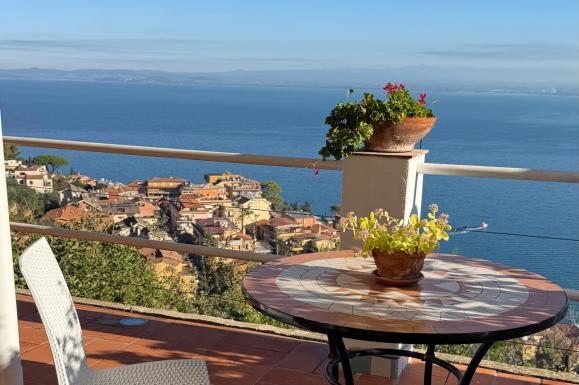
Many homes on the Riviera di Ponente belong to owners who live in the UK, Northern Europe or elsewhere. When the time comes to sell, the process follows Italian law, not the rules you know from home. There is no English-style conveyancing chain and no solicitor running the transaction: the sale ends with the rogito, the deed signed before an Italian notary (notaio), a public official who acts for neither party. Here is how to set the price, how long it takes and the mistakes that cost sellers most.
Price: start from actual sales, not listings
The most common mistake is asking too much “to leave room for negotiation”. An overpriced home gets few viewings in its first weeks online, when interest is highest. It then lingers, the price drops in stages and buyers wonder what is wrong with it.
A sound price is based on completed sales in the area, not on other asking prices. A public reference is the Property Market Observatory (OMI) of the Italian Revenue Agency, with price ranges by town and district. These are averages: floor, sea view, terrace, garage, condition and energy class can move the value a lot, which is why an in-person valuation matters.
For context: according to the Bank of Italy's survey of estate agents (Q2 2026), buyers in Italy obtained an average discount of about 7% on the asking price. A much larger gap usually means the starting price was out of line.
How long it takes
The same survey puts the average time from mandate to sale at about 5 months nationally in Q2 2026. A correctly priced home with documents ready sells sooner; an overpriced one, or one with irregularities to fix, much later. Then comes the period between the preliminary contract (compromesso) and the deed, agreed with the buyer and often driven by the buyer's mortgage.
Seven mistakes to avoid
- Listing before checking compliance. The deed must state that the property matches its land registry (catasto) data and floor plan, or it is void (art. 29(1-bis), Law 52/1985), and must quote the building permits (art. 46, Presidential Decree 380/2001; art. 40, Law 47/1985 for older buildings). An enclosed veranda or converted loft without permits, found by the buyer's surveyor, delays the sale and becomes a discount. Get a building compliance report before listing.
- Advertising without an APE. The energy class must appear in sale adverts (art. 6(8), Legislative Decree 192/2005), and the energy performance certificate (APE) must be available to the buyer during negotiations and attached to the deed (art. 6(2)). Fines run from €500 to €3,000 (art. 15(10)).
- Missing title documents. You need the deed by which you acquired the property. If you inherited it, you also need the Italian succession filing and the recorded acceptance of the inheritance, even if probate was handled abroad; without an unbroken chain of records the notary cannot proceed (art. 2650, Civil Code).
- Leaving condominium fees unclear. Under Italian law the buyer is jointly liable with you for fees of the current and previous year (art. 63, implementing provisions of the Civil Code), so buyers will ask for the payment status and any approved works.
- Rushed photos. Buyers shortlist on their phones. Natural light, tidy rooms, a floor plan and ideally video or a virtual tour decide who books a viewing.
- Accepting an offer verbally. Offers should be in writing, with price, deposit, conditions (such as a mortgage) and completion date. The compromesso must be in writing (art. 1351, Civil Code) and registered within 30 days. Unlike in France, there is no 10-day cooling-off period. With a caparra confirmatoria (deposit), if the buyer walks away you keep it; if you do, you repay double (art. 1385).
- Ignoring tax until the deed. If you sell within five years of buying, any gain (plusvalenza) is taxed in Italy, also for non-residents, because the property is in Italy (art. 23, Italian Income Tax Code, TUIR). It is exempt if the home was the main residence of you or your family for most of that period, and inherited homes are excluded (art. 67(1)(b) TUIR). Special rules apply after Superbonus works completed within the last ten years (art. 67(1)(b-bis)). At the deed you can ask the notary to apply a 26% flat tax (art. 1(496), Law 266/2005). Check your home country's rules and any double tax treaty with your adviser.
Selling from abroad
You can sell without travelling to Italy by giving a power of attorney (procura), which must take the same form as the deed (art. 1392, Civil Code): signed before an Italian notary, an Italian consulate or a local notary with apostille and translation. You will also need an Italian tax code (codice fiscale), which you already have if you bought the property. An outstanding mortgage is usually paid off at completion from the price, and the bank cancels it under a simplified procedure (art. 40-bis, Italian Banking Act).
Let's prepare it together
Aquamarina Real Estate has been selling homes in Sanremo, Bordighera and across the Riviera di Ponente since 2003. We start with a free, no-obligation valuation, check the documents with our surveyors before listing, take our own photos, video and drone footage and publish your home in 5 languages. We speak English, French, Russian, German and Dutch.
Request a free valuation, call +39 0184 26.16.87, email info@aquamarina.email or visit our offices in Sanremo, Via Roma 32, and Bordighera, Via Vittorio Emanuele 302.
If you prefer, a free 15-minute phone or video call with one of our experts.
Read also: Building Compliance Report (RRE) in Italy · Deposit, Withdrawal and Preliminary Contract in Italy
This guide is for information only and does not replace advice from a notary, surveyor or tax adviser.